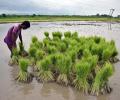
Among the key demands of agitating farmers has been a legal guarantee on minimum support price (MSP). The protest reached a crescendo when thousands of farmers from Punjab and elsewhere marched towards Delhi late last year and decided to block the main entry points once they were denied entry. The Centre, on its part, held 11 rounds of discussions with the protesters and even offered to amend some of the provisions without much success. With now one of their chief demands met, farmers have now moved on to force the government to concede on MSP.
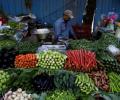
Retail inflation fell to a 15-month low of 5.66 per cent in March, mainly due to a decline in food prices, government data showed on Wednesday. The inflation figure in March is within the RBI's comfort zone as it is below 6 per cent. The retail inflation based on Consumer Price Index (CPI) was 6.44 per cent in February 2023 and 6.95 per cent in the year-ago period.

The Congress needs to reorganise itself at the grassroots, infuse younger blood, and have more boots on the ground. Just offering freebies is not the answer anymore. Leadership matters, asserts Ramesh Menon.

'We need to encourage the next generation of farmers to continue in farming'

To help revive the economy battered by COVID-19, Finance Minister Nirmala Sitharaman on Monday announced a slew of measures, including Rs 1.1 lakh crore credit guarantee scheme for improving health infrastructure, and enhancing the limit under the ECLGS by 50 per cent to Rs 4.5 lakh crore for the MSME sector facing liquidity crunch. Sharing the details of stimulus package, the finance minister said this comprises eight relief measures and other eight measures to support the economic growth. She announced Rs 1.1 lakh crore loan guarantee scheme for COVID-affected sectors, including health sector, which includes guarantee cover for expansion or for new projects. Besides, she said, additional Rs 1.5 lakh crore limit enhancement done for Emergency Credit Line Guarantee Scheme (ECLGS) scheme.

Robust procurement of paddy and wheat since 2017 and prompt payment to farmers have helped the UP government cultivate a positive and pro-farmer perception, defusing possible farm face-off situations.

Though the Bills of Punjab and Rajasthan have a lot of similarities, the one approved by the Chhattisgarh Assembly is structurally different. None of the three has tried to address a key demand of the agitating farmers in full, which is to make all payments below the MSP, within and outside mandis, illegal.

'The revival of household savings and investment is the litmus test of whether we are on the road to recovery,' says Nitin Desai.

Prime Minister Modi has certainly pulled back, and his political capital -- dependent as it is on an image that he knows best and never retreats -- may have taken a bit of a beating. But, equally, it is hard to say that the protesters have 'won', argues Mihir S Sharma.

Attacking critics, he said a "clique" of people exploited farmers for long as they remained in shackles of rules regulating the sale of their produce and stated that this needed to change, which his government has done.

Come June 2009 and the country may have its granaries overflowing with wheat and rice.

According to the ministry's statement, Tomar thanked the BKU (Kisan) leaders for coming out in support of the Farm Acts and said these laws have been welcomed in various states across the country.
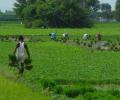
President Ram Nath Kovind on Monday said the country's farm production and procurement increased during 2020-21 crop year despite the pandemic and agricultural exports reached a record level of Rs 3 lakh crore during the same period. In his address to the joint sitting of both Houses of Parliament at the start of the Budget session, Kovind said the government is focusing on making the country self-sufficient in edible oils besides making special efforts to promote organic farming, natural farming and crop diversification. "My government is working continuously to empower the farmers and the rural economy of the country... I would like to give maximum credit to the small farmers of the country for this consistent success and strengthening of the agriculture sector," he said.

If more commodities which have seen a sharp rise in MSP are to be procured, such as pulses, oilseed and cereals, there could be a storage problem. Also, if state-owned Cotton Corporation of India joins in, this problem will aggravate.

State Bank of India's house economists on Monday said the recent farm sector reforms reek of parochial thinking and promote lazy farming as they only cater to cereal-producing states. In the recently concluded monsoon session, the government rushed through three legislation to change the way agricultural produce is marketed, sold and stored by dismantling the decades-old APMC (Agricultural Produce Market Committee) mandis.

The report admits that converting MSP to a floor price of auction on the eNAM portal will not completely solve the problem as the current data shows that average modal prices in e-NAM mandis is lower than the minimum support price in all commodities except urad.

The savings would be better spent and might actually reach the poor, says Rahul Khullar.
Opposition Bahujan Samaj Party on Tuesday created noisy scenes in the Uttar Pradesh Assembly over alleged "massive irregularities" in the procurement of wheat in the state and walked out expressing dissatisfaction of the government's response to the matter.

'This announcement is big foolishness.' 'The government has no idea of economics. They are just announcing what comes to their mind.' 'Let them implement what they have announced and just see what will happen in two years.'
Nothwithstanding the controversy last year over private procurement of wheat, domestic and multinational companies are getting set for another round of large-scale purchases this rabi season.

Cereals like millets can help alleviate malnutrition and improve public health, reports Surinder Sud.

The country had imported 5.5 million tonnes of pulses last year.

Under Pradhan Mantri Kisan Samman Nidhi (PM-KISAN) scheme, the Centre provides an annual financial benefit of Rs 6,000 to eligible beneficiary farmers in three equal four-monthly installments of Rs 2,000 each.
The irony of this scheme to benefit farmers is that it could add to the problems for the government because the mechanism to procure and store crops like pulses, coarse cereals and oilseeds barely exists.

Foodgrain stocks held in government godowns amounted to 50.2 million tonnes at the start of the current month, according to the latest data from the Food Corporation of India.

Days after their passage in the Lok Sabha, Tomar introduced the Farmer's Produce Trade and Commerce (Promotion and Facilitation) Bill, 2020, and the Farmers (Empowerment and Protection) Agreement of Price Assurance and Farm Services Bill, 2020 in the Rajya Sabha.

Prime Minister Narendra Modi's announcement of providing free inoculation to all adults will entail total spending of anywhere between Rs 45,000 crore and Rs 50,000 crore. This is higher than Rs 35,000 crore that the government had budgeted.
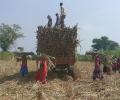
Nitin Tyagi is a young farmer in Budhagaon village of Baghpat district of Uttar Pradesh. A few years ago, Tyagi left his fairly lucrative job in the medical industry and shifted base to his ancestral village to look after his land and property. He opened a small shop selling farm inputs in the village and also started taking a greater interest in agricultural matters which had so far been looked after by his father and uncles. Tyagi and his brothers primarily grow sugarcane, potato and wheat on nearly 10 acres of land with sugarcane taking up most of his time and effort. Being one of the most important and lucrative cash crops of the region, sugarcane is directly linked to the fate of millions of farmers in west UP and with it, the electoral fortunes of political parties seeking their votes in the coming assembly polls.

However, the growth, driven largely by a bumper rabi harvest and facilitated by relaxation in lockdown, may not have resulted in a big rise in income for a section of farmers.

Rahul Gandhi on Tuesday took his fight against the contentious land acquisition bill to Punjab as he travelled by train today to visit the National Democratic Alliance-ruled state and see the condition of farmers with his own eyes.
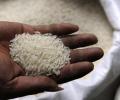
A 6-7 million tonnes shortfall in rice production due to a fall in paddy sowing area is likely to keep rice prices at elevated levels, adding to the inflationary pressure that the slowing economy is already grappling with. Elevated food prices, including that of cereals, had led to retail inflation reversing a three-month declining trend, to touch 7 per cent in August. Similarly, the wholesale price inflation, which declined to 11-month low, also showed price pressures from cereals resulting from wheat output being impacted by severe heat waves in some parts of the country.

'This confrontation could have been avoided by a less arrogant administration that initially listened, used whatever negotiating skills they had and tried to be more credible,' observes Ramesh Menon.

BJP leaders, from Union ministers to its MPs, MLAs, all elected representatives besides organisational members, will fan out across the country to attend the programme and speak to farmers as well.

>The protesters should entrust the final judgement on the farm reform laws to the Supreme Court-mandated committee of experts and return to their villages, argues Virendra Kapoor.

Battling a sharp surge in inflation, the Reserve Bank is all for a smooth monetary policy response and the desire to have smaller hikes led it to tighten the policy in an off-schedule meet, a source said on Thursday. Inflation has been massively impacted by Russia's invasion of Ukraine and will in due course also reflect the dent caused by Indonesia banning palm oil exports, the source aware of central bank thinking said, indicating that there was no other option but to respond. "The idea is to have a smooth policy response, not to put in large cold turkey responses," the source said, making it clear that the preference is for smaller magnitude responses and not larger ones.

To prevent rise in air pollution levels, oil marketing companies and thermal power units were planning to procure stubble from farmers to make bioethanol and promote the central government's 'Agricultural Mechanization' for crop residue management. But both have seen minimal success.

Finance Minister Nirmala Sitharaman presents her fourth Budget in Lok Sabha on Tuesday.

Might earn around Rs 3,720 crore on export of 2 mt of wheat, despite dipping prices in international markets

To justify that farmers must burn if they are not paid cash incentive is doing injustice to them and to the lungs of the children of the country, notes Sunita Narain.
The government on Wednesday raised the minimum support price (MSP) of paddy marginally by Rs 72 per quintal to Rs 1,940 per quintal for the 2021-22 crop year, while the rates of pulses, oilseeds and cereals were hiked substantially. Among the commercial crops, the MSP of cotton was increased by Rs 211 per quintal to Rs 5,726 for medium staple variety, and by Rs 200 per quintal to Rs 6,025 for long-staple variety of cotton for the 2021-22 crop year (July-June). The decision taken by the Cabinet headed by Prime Minister Narendra Modi will help farmers take a call on which kharif (summer) crop to grow as sowing picks with the spread of the Southwest monsoon in the coming weeks.
